Encouraging Compassion, The Fifty-Second Week of the Second Year in the New Abnormal

We are at the end of 2023 and yet life goes on with all its difficulties, complications, wonders, and joy.  As we change the calendar year perhaps there is a better way to move forward.  We traditionally make resolutions.  Maybe we call them something else, but so many of us want to better our lives and a new year can feel like a blank slate.  
I am all for making changes.  I’m hopeful to be kinder and more compassionate with myself.  This is a hope I’m carrying from this past year, day to day, and moment by moment.  I find hope is not enough, though.  It takes a daily practice of bringing compassion especially in times of struggle.  To that end, I am relying on my experience that a daily practice of compassion or kindheartedness can change our lives in unexpected ways.  Our hearts open up.  We can listen from a place of curiosity rather than assumptions.  We can better tolerate discomfort as we work to ease our pain.  And we experience possibility rather than imposing past negative beliefs.
If we look back, we can all see that when we were encouraged, we blossomed.  In college, Dr. Jones was a tough grader, but she was so uplifting, believing in her students’ ability to think for themselves.  I wanted to do well in her class and did the hard work required. Conversely, in my creative writing class with a published author, I felt defeated as she had a very specific idea of good and bad.  As an insecure 18-year-old, I quit before I even got started based on her condemnation.  What was always a pleasure as a young teen turned into a shame-based exercise in her class. Two English professors with the same student and very different results.  
As we set off into early 2024 let’s do what we can to encourage ourselves and others.  If we find we’re having negative thoughts or words, perhaps we can see that we’re feeling stuck, and we can try again.  There is always an opportunity for compassion.  Whatever the year, compassion never goes out of style. 

Self-Care Tips: 

  • Create a transitional ritual for those times when you’re going from one part of your day to another.  For instance, during your commute to the office you can listen to an inspirational piece of music.  And, before returning home you could possibly take a short walk around the block.  This way when you start a new part of your day there is space between where you’d been and where you’re going.  It’s like a refresh.  
  • Create a “Done” list.  When we have to-do lists we can get overwhelmed.  With a “Done” list we can feel a sense of accomplishment.
  • Create a self-care list so that is available when things get stressful and you don’t have the mental resources to think what can soothe you, you can reference your list and choose something that will help.  

Finding Peace, The Fifty-First Week in the Second Year of the New Abnormal

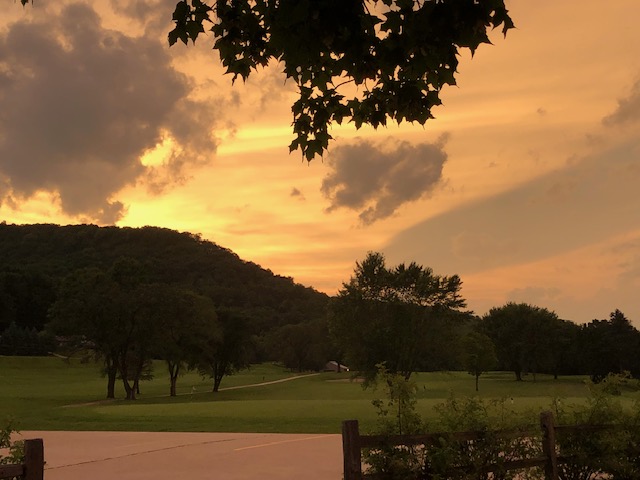
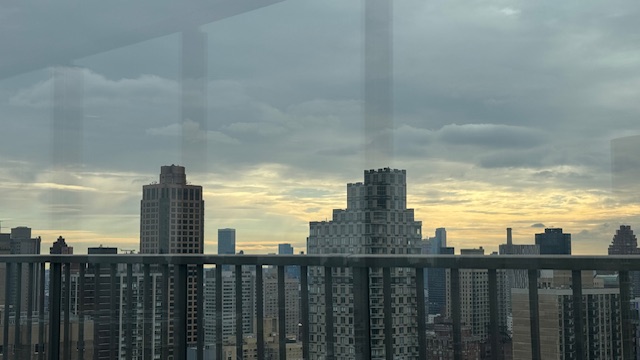
This week I’m sharing some past sunsets.  Seeing sunrises and sunsets makes me smile.  Sunsets remind me that nothing is permanent.  And sunrises are an apt metaphor that we always have a chance at a new beginning.  Both sentiments give me some peace.  And we could all use peace.

Too often when thinking of global peace we think it’s up to world leaders.  Or we can feel the futility of hoping for peace.  It’s easy to feel powerless when there are wars in too many regions of the world. When anger and hate fill our media outlets peace can seem allusive.  As a child, as with many of us, we learned the lyrics “Let there be peace on earth, and let it begin with me.”  I sung that song by rote.  I didn’t really think of what I was saying.  I found the tune bland.  I was not inspired.  And, yet, now when I hear talk of peace, and other songs referencing peace, I’m uplifted.  

Perhaps we can start with a smile.  It’s a small act, but it’s something we can offer.  There is a happy meditation that suggests we smile when we breath.  It changes our perspective and allows us to feel a bit lighter in the process.  And when we share a smile it brightens up someone else’s day. In the past I might smile from time to time, feeling good when people smiled back.  Admittedly I was resentful, as if I wasted a smile, when a blank stare or an unsmiling face looked back at me.  But I can’t really know if it was a wasted smile.  They may have had a delayed reaction.  In that case, I wouldn’t have been privy to a positive impact.  These days, I do my best to simply smile.  I don’t always get a smile in return, but when I do, I am doubly happy.   

 I suggest we all start smiling.  It may be an act of disruption since there has been a trend towards frustration, ire, and apathy.  But we can pierce through the murkier emotions and land on a piece of peace. 

This is not to say we should deny our feelings and err on the side of looking on the bright side.  That does nothing but perpetuate the murkiness.  Instead, we can acknowledge how hard it’s been and still share a smile with ourselves and others.  News cycles always use fear and anger as their hook.  Let’s lead with a smile, letting kindness be the hook.  Let’s nourish our joy rather than feeding our fears.  It’s a small step that can lead to collective inner peace.  

Self-Care Tips:

  • Take three deep breaths smiling while breathing.  See if it changes how you feel.  
  • Challenge yourself to smile at others and see how it feels.  What comes up for you when they smile back?  And what happens when they don’t respond positively?  Take note of your feelings.  Then challenge yourself again to share a smile.  
  • What makes you smile?  Remember to watch, read, listen to, or enjoy whatever makes you smile.  

Forgiveness, The Fiftieth Week of the Second Year in the New Abnormal

As the year approaches its end, forgiveness is on my mind.  I find that forgiveness is a process, though I used to imagine it was a one and done affair.  I earnestly believed that I could forgive someone and then I’d be okay with them.  I found that not to be the case.  It was easier to forgive if the person made changes.  Meaning they either stopped the offending behavior, or they started acting in a way they had avoided prior. 

When I was younger, probably, post three-years-old and before I was forty, when I did something that was not thoughtful of another and then was found out, I begged for forgiveness.  I needed to be forgiven to feel I could go on.  This may have come because my mother, known to others as being kind, was particularly unforgiving to her daughters.  One year I snuck into her bedroom closet to see if she got me a smart doll I coveted.  I couldn’t find it, but she found me in the walk-in, and then I made up a pathetic lie.  

When Hanukkah arrived the following week, I watched my sisters and brother open their gifts as I craved something to unwrap.  For seven evenings I sat with them hoping that night would be the night I would be forgiven and be handed a present for the holiday.  She begrudgingly gave me a gift-wrapped box on the final night.  And I acted as if the plaid pajamas was the nicest thing I owned.  

Now I understand that she was raising four children on her own since my father worked so many hours. And I had robbed her of one of the few joys she had as a mother, surprising us with gifts she secretly picked up while we were in school.  Plus, she was an honest person and lying was something she couldn’t abide.  I don’t know if she ever forgave me, or if my father pressured her to give me one gift.  Or, if neither were true and I simply needed a new nightgown, but I hugged her as if my life depended on it. 

I understood the power of forgiveness.  I made a point of forgiving, or acting as if I had forgiven as I soothed my soul until I could forgive.  And then I learned how forgiveness is something we give ourselves.  It takes away the negative feelings we harbor.  It releases us from the past so we can live lighter having unencumbered ourselves of umbrage.  My mother and I enjoyed that freedom as I matured, and I was able to appreciate all she had given me.  

Forgiving is not forgetting.  Forgiving is about not weaponizing past behaviors, of others or ourselves.  Forgiveness is an act of self-love.    We care enough about ourselves that we will not allow the past to hold us down.  And, yes, it’s a process.  Sometimes I have forgiven Larry, my husband, because he hadn’t thought of me when I wanted to be considered.  But I was not ready to let him know I forgave him.  I was still processing that forgiveness.  I knew I was in the final stages when I found my sense of humor and could own my part in our dynamic.  

And, though there is so much more to forgiveness, please forgive me for this short set of thoughts at the end of this year when too many have experienced way too much hurt.  For more on the subject, Harriet Lerner’s Why Won’t You Apologize is an excellent book on the subject.  

May we all find lightness of being by unshackling the burdens of our resentments.  Warm wishes this holiday season wherever you are in your path of forgiveness.  

Self-Care Tips:  

  • Read, reread, or listen to Harriet Lerner’s Why Won’t You Apologize.  Or listen to her TED talk:  https://www.youtube.com/watch?v=5r6Y9uhmL6Y
  • If you’d like to forgive, have compassion for the pain and upset you’re experiencing.  Caring for yourself is an important step in forgiveness.  Malachy McCourt’s quote is a great reminder of the power of forgiveness: “Resentment is like taking poison and waiting for the other person to die.  
  • Taking action in the service of others, like donating to a beloved non-profit, volunteering, being kind to a stranger, are great ways to work on self-forgiveness.