Bickering, The Twenty-Seventh Week in the Second Year of the New Abnormal

My son told me last weekend that he hoped he won’t have disagreements in his relationships like I have with my husband when he’s older.  It was interesting to hear, and as far as I understand he believes that with the amount of therapy, mindfulness practice, as well as the fact that I am a psychotherapist, I should be further along in my personal development, especially when it comes to my marriage.  There was a time I would have agreed.  I would have seen my defensiveness when my feelings are hurt, and that my feelings get hurt at all, as a fault in my character.  
I am not proud that I bicker easily, or that I am quick to react, but I am no longer ashamed that both are true.  Like Alex, I imagined that when I was in my sixties I would have life figured out.  I believed I’d be highly advanced in my communications, and I’d be able to easily respond with patience and self-reflection.  The truth is I am still learning.  I have more acceptance of the bickering, appreciating that our marriage has the strength to encompass unpleasant moments.  However, more time is needed to learn to have a sense of humor about myself, to find ease when I want recognition and appreciation, and to accept that my way is not the only way.  
In our twenty-six years of marriage Larry and I have been able to spend less time upset with one another. Repair is quicker and easier.  And we laugh a lot more together.  I am proud of that growth.  We married later in life, but we came together with much to learn about healthy relationships.  And we continue to learn.  Every conflict is a new opportunity.  

I appreciate Alex’s comment because it allows me to see how it looks from his perspective.  I can only imagine the impact our bickering caused him unable to escape it in his earlier years in our compact apartment.  Presently his opinion and my response to conflict allows me to find acceptance with the imperfections of being human.  Being a therapist does not mean I’m immune to familial disagreements.  It means that I am committed to learning and growing one quarrel at a time.  

Self-Care Tips:

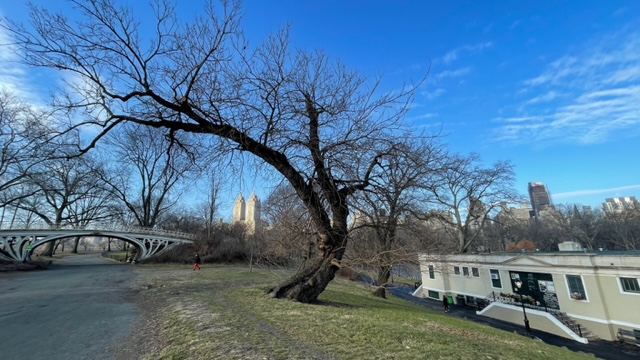
  • Take the same short walk three different ways.  Walk looking ahead on one walk.  Walk looking up.  And walk looking down.  How different are these walks covering the same ground?  This can be a metaphor for our memories.  Though we may remember the same experience, when we are in a different place in our lives, we might view it in a new way.  
  • When you have a disagreement, rather than seeing what is wrong with the other person, ask yourself what you need to feel at ease.  This way you address a need rather than trying to be right or change someone else. 
  • Take an analog and digital break.  Read a book or magazine, hand write in a paper journal, paint with watercolors, play with a real deck of cards, play a board game, knit, play ball, or find a concrete activity off-screen.    

Maine, The Twenty-Sixth Week of the Second Year in the New Abnormal

Summers are not as warm in Maine as they are in New York City.  The air is fresh with ocean mists and the sun has been shy peeking out from the fog on this visit. We came to Portland to visit friends, enjoy lobster in any number of ways, and walk the charming streets in this compact city.  

The beauty of the coast is something else.  Cliffs making way to crashing waves is beautiful from the high land.  I imagine it was devastating for sailors of the past who found the shore inhospitable.  

Larry’s and my love of traveling together began over 27 years ago on a road trip through Maine.  We loved seeing the varying coastline, the New England inns that offered warmth and pure hospitality.  Of course, lobsters featured throughout that trip.  It is nice to be back.  And, even better to be back to enjoy it with our friends.  It was a gift to see how they built a home and a community in this wonderful place.  And they shared their love for Portland with us.  Their hearts are generous, and we are such fortunate recipients of their munificence. 

Taking this short trip reminds me again of the goodness in people, and the pleasure in leaving home to open my mind and my heart.  

Self-Care Tips:

  • Send an old friend a hand-written note.  It’s so nice to connect with someone who has made a difference in your life.  If you can’t see them in person a note or letter feels good when sending it and they enjoy receiving it.  
  • Introduce new herbs and spices into your food, and/or into your garden.  I just tried lovage for the first time and it had a unique yet familiar taste to it.  
  • We’re always told to go out of our comfort zones.  Instead, give yourself some time to create a comfort zone for yourself that is cozy and safe.  Know you can always go there when needed, no matter how many times you leave.  

Rest & Activity, The Twenty-Fifth Week in the Second Year of the New Abnormal

It was a muggy day in the city.  I went to bed late and gave myself the luxury of resting in bed yesterday morning.  There was a lot to do, but my body craved relaxation, and rather than rush to place my feet on the floor, I lingered under the sheets, enjoying the ease of a restful morning.  

I’m usually a doer.  At some point in my development I got the message that being lazy was not a good thing.  I made a point of being busy. Rather than being busy when necessary and resting when needed, I seemed intent on proving I wasn’t lazy.  However, I had ongoing  jealousy for those who enjoyed life doing less.  That seemed impossible to me.  Thankfully, post-Covid, I have come to see the value in proper rest.  

Though I still have a long way to go to unwind the belief that one must be busy, I am glad that yesterday morning I could enjoy a restful dawning of the day.  It allowed me to find the energy early in the afternoon to go on a short jog.  It’s been a year since I’ve been able to run due to a sprained ankle.  Even though I knew that long distance running was part of my past, I’m aware that I really enjoy running as an ongoing activity.  So, I put on my ankle brace along with two knee braces, and I set out to run for a mile on East End Avenue asphalt.

Asphalt is easier on the joints and fairly level, which makes for a safer run.  It felt so nice to run.  Albeit I’m slower with less energy than last year.  But it was the act of running that felt freeing.  I look forward to running again today.  Luckily, I had a great night’s sleep, so I’m well rested for today’s slow jog.  And, after that?  Maybe a nap. 

Self-Care Tips: 

  • What activity or experience is pure joy, so much so that you lose track of time?  How do you feel thinking about it?  When you have a chance, try diving into the activity.  If there isn’t an opportunity, think about it for a moment and take note of how you feel while basking in that memory. 
  • Reflect on your week and make a note of anything that went better than expected?  Are you able to have gratitude for the better-than-anticipated experience?  If so, take a moment to be with that gratitude.  
  • Check in with your body.  Do you have an abundance of energy?  If so, do something physical to optimize that energy burst.  If not, take a moment (or more, if possible) to relax, letting your body know you’re listening.  

Micro Adjustments, The Twentieth Week of the Second Year in the New Abnormal

I just heard about micro adjustments. I’d never heard the phrase or the concept before. It was introduced as a mindfulness practice to adjust our perspective from getting lost in our thoughts, or external circumstances, to coming back to the present moment. It connotes adjusting our consciousness from distraction to mindful awareness.  This may not be a new concept, but it’s new to me.  

I love the idea of micro adjustments.  They are slight but meaningful.  I plan on implementing micro adjustments when listening, or writing, or simply when walking and viewing the city.  When I catch myself drifting away lost in a thought loop I can micro adjust to enjoy the moment again.  

I tried it this rainy morning while baking banana bread.  I was half-way through the recipe when I started looking through the cabinets wondering how many spices and various ingredients I was never going to use.  Too many, that’s how many.  So, I started to get the foot ladder to make room on the top shelves.  Then I caught myself sidetracked, again.  I stepped down from the ladder, turned around, and then continued mixing the dry ingredients into the wet batter.  

It felt so good to go back to my original activity.  I completed the mixing, the pouring into the pan, and the clean-up before returning to the cabinets.  It’s a quotidian moment, home tasks, easily diverted, then going back to start over again.  I’m easily distracted. Having a phrase that quantifies that instant when the shift takes place bringing me back to the present is terrific.  Micro adjustments are my new favorite contextual idiom.  

Self-Care Tips:

  • The next time you find yourself readjusting to the present moment, remember you just performed a micro adjustment. Acknowledge yourself. 
  • Name something you know you do well.  Smile, and take a moment to appreciate your gift.
  • Look in your cabinets, refrigerator or pantry and get rid of anything beyond expired, or anything you have that you privately know you’ll never use.  Then enjoy the space created.

Tattle Tales, The Fourteenth Week of the Second Year in the New Abnormal

I grew up with three siblings.  If you grew up with siblings, as I did, you are familiar with the age-old enterprise of tattling.  My younger sister, Susan, now Chova Sara, was the tattletale.  She was the one that thought it important to report to my parents, usually our mom, whatever misadventures we were enacting.  When I was six to her four, she ran to our mom to say I wasn’t letting her play with my Barbies.  This was true, but only because she cut their hair and drew on them with crayons.  Nonetheless, I had to release more dolls to her based on “fairness.”  This made no sense to me, but she got what she wanted, and it spurred her on for years.  

When I was fifteen she couldn’t get downstairs fast enough when she rifled through my drawers and found my almost full pack of Eve cigarettes.  I was no smoker, but I did purchase a 75 cent pack to try and smoke at high school socials.  I, a frizzy haired, acne prone teen with a penchant for musicals, wanted to seem cool.  I imagined cigarettes was the entry point.  I coughed more than I inhaled, thus ending a two-week foray into the impossible road to being a cool, cigarette-smoking kid.  But I kept the pack just in case I could offer an Eve to one of the true cool kids. 

Our mom, a former smoker, who coughed if she even thought there was smoke around her, was furious. I was grounded.  My explanation had holes.  Not only did I own a forbidden pack of cigarettes, but I was going to share an unhealthy habit with someone else.  While our mom lambasted me, I got a glimpse of Susan’s righteous smirk.  I imagine that same smirk on each of the mouths of all the tattlers online.  We have morphed into a culture of telling on others. 

When did we learn that telling on others was a better strategy than speaking in a respectful manner to said perpetrator?  We gain so much from having thoughtful dialog.  We may disagree, and in many instances, we may not come to a resolution, but there is a chance to connect rather than divide if we speak to one another rather than tell on each other.  

I believe when we feel we lack personal power we resort to public ranting or gossiping.  We dump our righteous opinions on the masses where we hope to receive positive reinforcement for negativity.  However, real confidence comes from being courageous enough to speak up without shaming someone else. In this way there’s a possibility you both might learn and grow.  Perhaps we can build our self-worth not by being righteous, which only strokes our egos, but by privately harnessing our emotional responses and caring for ourselves as we process those emotions. By looking inward instead of pointing fingers, we thoughtfully take steps towards positive change.   

Self-Care Tips:

  • Muster the courage to speak with someone with whom you disagree.  Let them know you want to understand their thoughts and actions.  Be open and think about what they tell you.  Monitor your emotional response.  And share your perspective, not to convince, but because you both matter.  
  • Stop! If you are about to rant with someone(s) who is/are not your friends, take a beat, write in a journal, but withhold from adding to the public negativity forum.  
  • Hold your own hand as if you’re holding hands with yourself.  Notice what that feels like.  Do you feel your own warmth?  Allow you to be there for yourself with this small gesture.  

Fails, The Twelfth Week of the Second Year in the new Abnormal

I just heard that The Museum of Failure in Brooklyn opened last week (https://museumoffailure.com).  It’s primarily a collection of product fails through the last 5 decades or so.  I’m happy to be celebrating failure.  Their slogan is “Innovation Needs Failure!”  I’m not so sure I can say I’ve been innovative, unless one considers resourcefulness as an innovation, but I can say with absolute certainty that I, too, have a history of failures.

Though certainly not my first or last, but within vivid memory, is my failed first driving test. I remain an anxious driver. Lucky for me and other vehicles on the road, I live in Manhattan, have not owned a car since my late teens, and rarely drive.  At the time, I was 17, did not want to take the bus to high school anymore, and was horrified that I failed.  I didn’t want to drive so much as reap the benefits of being a driver, but I could not face my friends and classmates admitting to this personal and social failure.  

It’s taken me long time to own my failures. When I was younger, I was horrified to share any failures. Either I was afraid I’d get in trouble, or I was afraid I’d be judged poorly.  Though I experienced both, it was my own self-judgement that was harsher than anything I endured by others.  Luckily, the long line of mistakes I’ve made in this life have allowed me the opportunity to soften my judgement, and simply see mistakes as part of the human experience. 

Hopefully over the years I’ve learned from my mistakes.  Sadly, some mistakes hurt others by over sharing, or needing to fulfill some personal need rather than understanding that it would harm some else.  I lost friends given my poor judgement.  But I’ve also had friends who had a forgiving heart and understood I was lost or misguided, forgiving me, and allowing me to do better.  It is those friends, therapists, and family members who fostered change and growth.  I will always be grateful to them.  And I am now grateful to those who walked away because they didn’t want to be hurt again.  They taught me to do better and be better and to treat myself with care rather than look to others to validate me, especially when vulnerable. 

I look forward to making the trip to the Museum of Failure.  There’s something comforting in knowing it’s out there.  

Self-Care Tips:

  • When you’ve failed at something, write in a journal how it feels, and, when possible, what you learned that will help you in the future.  Try as best you can to be gentle with yourself, appreciating that the failure is part of the journey.  
  • When speaking on the phone purposely smile.  There is research to suggest that smiling lightens one’s speaking tone allowing for a more positive interaction.  
  • Throughout the day repeat the phrase, aloud or internally, “I am Enough.”  Experiencing ourselves as enough releases the pressure to be more, better, or different.  

Unexpected Kindness, The Eleventh Week in the Second Year of the New Abnormal

I left my passport at the hotel two and half miles from Reykjavik.  I was leaving for JFK the next day.  We had had a magnificent trip, and my passport was in the safe where I left it along with U.S. dollars I wasn’t going to spend in Iceland.  Our driver, an adventure tour guide in his own right, was going to drop off some guests and pick up passengers to bring back to the capitol city the next morning.  He would be happy to bring back my passport and drive us to the airport.  The magnificent experience continued.  

I next called the hotel. They got back to me to let me know they had secured my passport and money and it was in an envelope at the front desk waiting for our driver.  This was all done with ease.  The Icelandic vibe was “no problem.”  It seemed inherent to them to be kind and considerate.  They did not communicate any extra effort, nor did they indicate I was putting them out in any way.  I was beyond relieved.  

Surprisingly, I also didn’t berate myself for my forgetfulness.  Not that long ago I would have been so hard on myself for not being uber aware of everything.  This time, though, my mistake led to a greater appreciation of the kindness of others.  To be the fortunate recipient of thoughtfulness was another gift of the trip.  Not only did we enjoy natural wonders, but we also took pleasure in naturally wonderful people.  It was good fortune, indeed. 

Self-Care Tips:

  • See if there is an easy way to give to another.  Offer your seat on public transportation, open the door for a stranger, pay for someone else’s coffee, or create your own thoughtful act.  Be part of an enduring act of kindness.  
  • Let someone know how much you appreciate their kindness.  Whether you mention something having witness a kind act, are in touch with someone from the past who was good to you, or you give a warm thank you in the moment, your appreciation perpetuates kindness at large.  
  • Identify aspects of nature you most enjoy.  If you’re able to visit, great.  If not, perhaps you can find items or scents that elicit your enjoyment. It can be sea water, flowers, cut grass, or mountain air.  Whatever your pleasure, breath in the satisfying aroma.  

I Quit! The Sixth Week in the Second Year of the New Abnormal

I was walking downtown listening to a light novel, a quasi-romcom.  It had started off well and then it took a nose-dive from there.  About halfway to my destination I turned it off.  I simply wasn’t enjoying it anymore.  I had wanted a break from heavier subjects or professional readings.  This was not the break I needed.  

Growing up I often heard the adage “Losers Never Quit, and Quitters Never Lose.”  In this case, I was losing time and joy if I didn’t quit.  For so long I had always finished the books I started, I didn’t cancel plans unless there was an emergency.  And I stayed to the end of plays, movies, television series and concerts rather than leave at the intermission if I wasn’t enjoying it.  The pleasure of maturing, or at least being older is that I do not have to berate myself for quitting.  

Stopping when something is not right for us is a gift, not a determination of failure.  I win when I consider my needs.  Of course, this is not a recommendation to simply quit whenever we want.  Reading a book for pleasure means that I am seeking pleasure in reading it.  When it’s not pleasurable, then quitting and finding something that I do find pleasurable meets my goal of a pleasurable read.  When I’m meditating and I get uncomfortable, I don’t quit, I observe what’s happening and fold that into the meditation practice.  Mediation is about making space for whatever is happening.  So I am not betraying my goal by resisting quitting in the middle. 

It’s not always easy to choose whether to carry on with an activity or whether to quit because it’s not in our best interest.  When I was younger, I was stuck because I thought quitting spoke of a weak characteristic in me, and I wanted to avoid that.  Accepting ourselves by not living dogmatically allows us to assess when to quit and when to keep going.  I am more apt to find my way forward when I’m not forcing it.  When I take away the “shoulds” it’s easier to make the right choice for any given time.  Onto a new book.  Making that choice is enjoyable.  

Self-Care Tips:

  • What “Shoulds” have burdened you?  Any chance you can let them go?  If that’s difficult, ask yourself, “does completing it serve me, or am I defending against some idea I have about that particular “should?”
  • If you find you regret something you quit before you had a chance to achieve a goal, ask yourself if you can go back.  It can be great to pick up dancing when older.  Or, try learning the language through an easy tutorial or class that you started in high school.  
  • Find soaps for your face and for your body that have a texture and aroma that you find pleasing.  It makes such a difference when we wash ourselves and it feels soothing.  Your senses of smell and touch will feel well taken care of.  

Swimming on Vacation, The Fourth Week of the Second Year of the New Abnormal

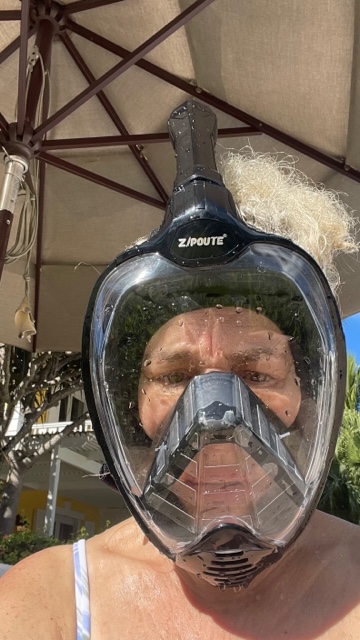
I swam for an hour, my head submerged in the warm pool with tiny, wavy prisms, iridescent in the sun-drenched water.  The luxury of having a pool to myself is priceless.  Being able to move seamlessly underwater, thanks to my swimmers’ mask, allows me to stay beneath the surface, enjoying what I’d describe as a meditation in motion.  

 We’re on vacation.  That in and of itself is a gift of relaxation.  I had become rather snippy the first weeks of January, which is always a sign that I need a reset.  I’m still noticing some sharp edges that have yet to be smoothed completely, but the warm air, the sun and the tranquil atmosphere are working their magic.  

There’s a simple ease to being in the Caribbean.  Being able to swim with my mask adds a layer of delight as this vacation kneads the knots of stress from my body, mind and soul.  Sometimes in life there’s a simple fix that changes an experience from okay to wonderful.  That is true of my swimmers’ mask, a device that looks like an outer space unicorn.  It takes up the entire face, so unlike a snorkel, I can breathe just under the surface of water from either my mouth or nose.  There’s a stop at the tip of the hose at the center that prevents water from entering.  And the hose at the center means that swimmers like me can stroke our arms without hitting the tube.  All in all, I am so grateful for this wonderful addition to my swim.  

Life hacks can really help us when they make life easier or more enjoyable.  Years ago, Larry taught me that having the right tool for the right job matters.  He showed me how a well sharpened knife makes a huge difference in the joy of cooking.  Or the correct screwdriver can shorten a belabored task.  Now I have my swim mask, less a tool that a piece of equipment that provides a panoramic view of the pool or the ocean.  A few more swims and the last of the sharp edges will disappear.  At least for now.

Self-Care Tips:

  • Check to see if there’s an easier way to do your chores or activities.  A silicon spatula is helpful to scramble eggs while being gentle on your pan.  A group or family calendar is useful for scheduling.  And a small packet of wipes in your bag or car are good at any age.  
  • If you feel overwhelmed, rather than power on, take a short break.  Walk around the block, meditate, take a power nap, or stretch.  Breaks help us to refocus.  
  • When on the phone, smile while speaking.  It brightens our tone and communicates a softer nature.  

What’s For Dinner? Second Week of the Second Year in the New Abnormal

I was preparing dinner as I do many nights.  Last night was pesto glazed salmon and garlic-marinaded skirt steak with sauteed spinach, garlic bread, and a spicy salad.  Thanks to Marion Zinn, my mother-in-law, I have the best marinade for the steak.  She was a wonderful hostess and served many delicious dishes.  Conversely, my mother would get anxious when hosting guests.  Nonetheless she deserves a shout out as an excellent baker. All three of my siblings and I have fond memories of annual birthday cakes baked from scratch, stored on a glass cake plate with an aluminum cake dome.  I used to cook and bake regularly, but as life’s responsibilities expanded, my domestic duties dwindled.   

Sometimes, though, I want to have a home cooked meal.  I shopped at the farmer’s market gathering some ingredients for dinner, and foraged the refrigerator for the rest.  Even as I began the prep work, I remained hopeful for a nice dinner.  Inevitably, by early evening, I was forgetting one thing or another, and my hope slipped to a tepid aspiration for a good enough meal.  Perhaps it’s this feeling along with my full schedule that diminishes my fondness for cooking these days.   

I realized, which might mean I’m late to the game, that planning, and subsequently serving, dinner is a process that mimics the complications of caring for oneself and perhaps others.  First there’s the consideration of taste.  What do I like?  What does Larry like?  Are there foods that appeal to us as the same time?  If not, what variations do I make?  Will I challenge myself with a new recipe or will I rely on the tried and true?  Not only does flavor matter, but so does nutrition.  I’m not a stickler that every meal meets the daily requirements of a balanced meal plan. However, I do like to have a variety of tastes, textures and basic health guidelines met.  

Now and again meals are more fly by night, others are indulgences, and more often meals are simple and easy to put together after jam-packed days.  I always enjoy good food.  I’m flexible in that I truly enjoy an array of possibilities from vegan to Omakase, and so much in-between.  I prefer local and organic, but I also shop at Trader Joe’s appreciative of their vast and changing selections.  One thing is for sure, I prefer choices, as I do in so many parts of my life.  

In getting dinner together, last night and previously, I’ve noticed the range of feelings I experience.  I start out hopeful, I have moments of frustration, periods I feel relaxed and trusting, and times I get annoyed, wishing I was being served rather than doing the serving.  And I challenge myself to get through the feelings of anxiousness closer to putting the meal on the table.  All in all, it replicates the processes I go through in other areas of my life, which include the original idea, the thought process and the execution.  So much stuffed into a quotidian endeavor.  

Self-Care Tips:

  • Recipe for Marion’s marinade: ¼ cup olive oil, just less than ¼ cup cider vinegar, 3 Tablespoons or more of soy sauce, ¼ cup honey, lots and lots of chopped garlic, ½ teaspoon grated ginger (can use fresh, jarred or dry ginger if that’s what you have) Enjoy!
  • Take an everyday activity and break it down, checking in to see the array of feelings you have throughout the process.  Can you insert kindness and care when it feels uncomfortable?  Are you able to go with it when it feels pleasant?  If so, acknowledge yourself.  If not, see if you can make room for whatever comes us.  
  • Chapstick. It’s a great way to get through the winter.  Choose from a host of aromas, flavors, textures and ingredients. Find the one that’s good for you.