I am a Jewish Psychotherapist, The Forty-First Week of the Second Year in the New Abnormal

Do I speak of the unspeakable?  This past week marks a tragic low in inhumane acts.  I cannot get my head around it.  As a Jewish psychotherapist I am in a similar position as I was when we faced the pandemic.  I am going through something that I am also hearing from my clients.  The sadness, along with so many other emotions, have been omnipresent this past week.  

Since there are so many experts writing and speaking about the issues surrounding the terrorist attacks, I will not even try to address it head on.  What I can speak to is how now more than ever we can attend to our mental health.  We can care for ourselves with the utmost respect.  We can be gentle and kind.  Patience is required as we may seek out numbing agents or distractions while feeling emotionally overwhelmed. 

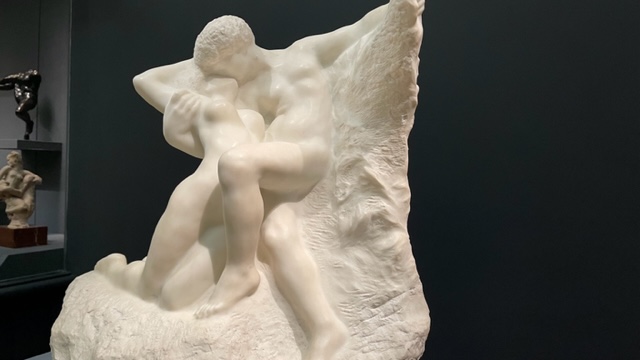
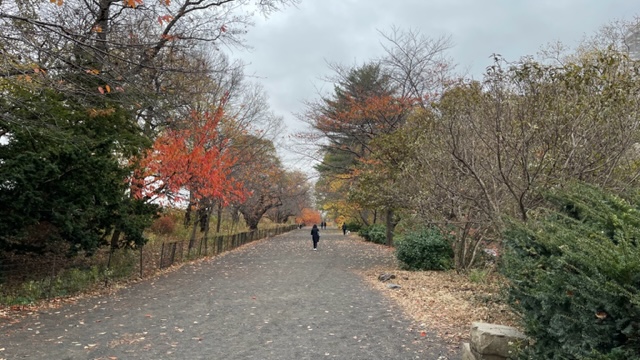
Taking life slowly for the moment may allow for processing the pain while creating openings for the small joys of any given day.  Walks have felt particularly therapeutic to me.  I have gone to take in artwork, and I am listening to more soulful music. Rest has been mildly restorative at the end of my days and at the conclusion of my work week.  I hope you will find the people and things that comfort you.  As citizens of the world we are all impacted one way or another by this and other atrocities.    

I pray for accord and wish for every innocent person to thrive on a peaceful planet.   

Self-Care Tips:  

  • Move slowly through the world.  The movement will help with stress release, and being embodied helps locate and address your current experience.  Gentle stretching, walking in nature, dancing to music that moves you are all suggestions for your body and soul.  
  • Reach out to those you care about.  Ask how people are doing.  If you’re overloaded, no need to ask, you can simply let them know you’re thinking of them. 
  • Pray and meditate.  If you are a non-believer prayer can simply be taking in the world around you. Become acquainted with your inner and outer selves as we heal individually, and ultimately ,we heal for all humanity.  

Rest & Activity, The Twenty-Fifth Week in the Second Year of the New Abnormal

It was a muggy day in the city.  I went to bed late and gave myself the luxury of resting in bed yesterday morning.  There was a lot to do, but my body craved relaxation, and rather than rush to place my feet on the floor, I lingered under the sheets, enjoying the ease of a restful morning.  

I’m usually a doer.  At some point in my development I got the message that being lazy was not a good thing.  I made a point of being busy. Rather than being busy when necessary and resting when needed, I seemed intent on proving I wasn’t lazy.  However, I had ongoing  jealousy for those who enjoyed life doing less.  That seemed impossible to me.  Thankfully, post-Covid, I have come to see the value in proper rest.  

Though I still have a long way to go to unwind the belief that one must be busy, I am glad that yesterday morning I could enjoy a restful dawning of the day.  It allowed me to find the energy early in the afternoon to go on a short jog.  It’s been a year since I’ve been able to run due to a sprained ankle.  Even though I knew that long distance running was part of my past, I’m aware that I really enjoy running as an ongoing activity.  So, I put on my ankle brace along with two knee braces, and I set out to run for a mile on East End Avenue asphalt.

Asphalt is easier on the joints and fairly level, which makes for a safer run.  It felt so nice to run.  Albeit I’m slower with less energy than last year.  But it was the act of running that felt freeing.  I look forward to running again today.  Luckily, I had a great night’s sleep, so I’m well rested for today’s slow jog.  And, after that?  Maybe a nap. 

Self-Care Tips: 

  • What activity or experience is pure joy, so much so that you lose track of time?  How do you feel thinking about it?  When you have a chance, try diving into the activity.  If there isn’t an opportunity, think about it for a moment and take note of how you feel while basking in that memory. 
  • Reflect on your week and make a note of anything that went better than expected?  Are you able to have gratitude for the better-than-anticipated experience?  If so, take a moment to be with that gratitude.  
  • Check in with your body.  Do you have an abundance of energy?  If so, do something physical to optimize that energy burst.  If not, take a moment (or more, if possible) to relax, letting your body know you’re listening.  

Fathers Day, The Twenty-Fourth Week of the Second Year in the New Abnormal

Happy Father’s Day.  When I say that it conjures up so much for me and for so many others, I expect you included.  Many of us have had varied relationships with our fathers nothing like Father Knows Best, The Courtship of Eddie’s Father, Blackish, or even Home Improvement.  If only we could tune in for 30 minutes a week and enjoy the comical moments that focus on the highlights of the best parts of them, with a little silly thrown in.  

My dad was king when it came to bad dad jokes.  I would groan, embarrassed I had a dad who would even say “Don’t bother. Everything looks good this way,” every time I offered to clean his overly-smudged spectacles.  Larry, though fastidious with his eyewear, has taken on the torch of bad dad jokes.  Usually they’re groaners, but once in a while they make us laugh.  Maybe he’s not comedy ready, but the few good ones could be included in a non-existent situation comedy.  

Whatever our experience is with our dads, good, difficult, sad, troubled, no one is one dimensional.  I will always appreciate my father for working in his shoe store at age twelve and thirteen, my second job following babysitting.  I learned how to work the cash register, count backwards to give proper change, and people watch.  I could see when finances were tight, and the family was spending money they didn’t have to get back-to-school shoes for their children.  We always made sure they got a small toy to go with their purchase.  Of course, Buster Brown customers, the families who could afford new shoes for Autumn, in addition to maryjanes for special occasions, would get a molded replica of Tige, Buster Brown’s dog, or some other brand trinket.  

I recognized the lonely ladies who had difficult feet to fit who came in to find their next slip-ons, even though they would go home with nothing.  My dad worked as hard for them as any of his customers, even as he knew he needed to make his sales to keep his business afloat.  

I learned about hard work, and I learned about the unfairness of life while helping him out at the store.  I also learned how to clean a rug with an overused, old vacuum cleaner.  All valuable life lessons.  

Sometimes our dads inspire us to reparent ourselves.  Their best might not have been best for us.  So we muddle on learning from our mistakes, and theirs, so we can learn to care for ourselves better, as well as others others, if possible.  

Larry is a loving father.  He made sure that Alex benefitted from his music connections to see special shows and concerts.  He learned to love gently and learned acceptance as our son transitioned to a young trans man.  

Parenthood can be a lesson for all of us no matter who our fathers are or were, or even in their total absence.  Parenting is an ongoing process of love, patience, humility, joy, fear, sadness, awe, grief, and so much more.  But isn’t that true of all of life?  

Self-Care Tips:

  • Make a list of what you’ve learned from your father, good, bad or otherwise.  See how that imperfect relationship has shaped you. See if you are able to be grateful for something he/they brought to your life. 
  • Being caring to yourself today.  Reparent yourself in a way that embodies the parent you need at this time.  
  • Laugh.  It can be something dumb like a dad joke, but enjoy a moment of levity today.  

Train Delay, The Twenty-First Week of the Second Year in the New Abnormal

The Q train came to a halting stop.  An announcement immediately came on asking “Who pulled the emergency cord?”  At the end of our car, a good citizen thinking there was a request to pull the cord, got up from her seat, pulled the cord, even as the train stood idle.  She sat back down returning to her book.  A hardcover, old school, though she looked barely 25.  

I was slightly annoyed to have my short trip home delayed.  We were in-between the Union Square and 34thStreet stops.  The tunnel between the stops is a mile of tracks and darkness.  The lights were on in the train.  As I looked around I saw eyes meeting strangers’ eyes, a rare occurrence in the subway.  Seated neighbors started to talk.  I remained quiet, looking to see if anyone was panicking.  Surprisingly, everyone was in a good mood and remained calm.  Perhaps that had more to do with it being 9:30 pm on a Friday night, the start of a three-day weekend.  

A seasoned older gentleman, well, probably no older than me, was reassuring a group of tourists that he had been through this before and we’d get through this.  Others mentioned this had never happened to them before.  Personally, I couldn’t remember a time the emergency brake was pulled on a train.  I’d been delayed in my 42 years traveling underground, but this was new for me.  

I looked to see that my phone battery was full, settling in to read downloaded articles.  I barely finished the first short read when an announcement proclaimed we would be starting shortly.  I assumed the vague phrase meant something different to the crew than to us passengers.  However, within three minutes, around fifteen minutes in total, we were again on our way. 

It was a meaningful quarter hour.  Strangers supported one another.  Everyone remained composed, and we all clapped when the train moved forward.  Rather than ruining a terrific evening, it elevated my night, giving me hope.  Witnessing this sliver of kindness and respect reassured me in a city that is known by many as dangerous and cold.  Given the opportunity my subway car-mates chose kindheartedness.  

Self-Care Tips:

  • Offer assistance.  Sometimes we see someone struggling, and if we open a door, help them cross the street, or give of ourselves in way that is not a hardship, we feel uplifted.  We get when we give.  
  • Practice calming habits, whether it’s a breathing exercise or tensing & relieving muscles, having a tool in a potentially stressful situation will be invaluable when that tension-filled time comes.  
  • When in a public place, people watch.  See if you can observe an act of kindness or a moment of care.  You, too, may find it reassuring.  

Our Relationship With the Weather, The Seventeenth Week of the Second Year of the New Abnormal

Growing up we wore rubbers or rubber boots, gently stretching them until they covered our shoes.  It was a hassle taking them on and off.  But to keep our leather saddle shoes somewhat dry, we sported rubbers over our two-toned oxfords.  These days my low rubber boots are the only shoes I need when it’s wet outside. They keep the water from soaking my socks and allow me to walk about in the rain.  

It’s been a rare occurrence that we’ve had two rainy days on a weekend.  This weekend we’re soggy and a bit chilly.  Lucy, our dog, isn’t inclined to go out, and neither am I.  I danced in our living room for a while moving to international music, happy to be in the flow, not so happy to feel the aches of muscles waking up after being dormant.  Weekends usually mean at least one long walk.  Sometimes it’s a great time to walk when it’s raining.  The sidewalks are less crowded.  Everyone wants to stay inside.  

The rain inspires me to slow down.  I like that.  Of course, other than a few errands, I was not required to work outside, so the impact of the rain is minimal.  Rain in the city, at least when it’s not flood conditions, does not impact us in the same way as it does in more natural settings.  With proper rubber boots and waterproof outerwear, we can navigate curb rivers and downpours.  We may be soggy, but we’re not deterred.  

Self-Care Tips:

  • Make sure you have shoes and clothing for the rain.  An old Scandinavian saying goes, “There is no such thing as bad weather, just the wrong clothing.” Being prepared is self-care.
  • Notice how different weather affects you.  Respect the weather’s impact so that you are attuned to yourself in relationship to your environmental conditions.
  • Dance.  Play the music you like or find a playlist.  Even if you feel achy, it fires up muscles and brings joy no matter the weather.  

Dashed Plans, The Thirteenth Week of the Second Year in the new Abnormal

I am a planner. Though I am open to spontaneous experiences, I usually rely on my calendar to settle into the day. In recent months I have had to change plans a good number of times.  Often, I’ve enjoyed folding the new into what I had expected.  But this last week too many plans changed, and my equilibrium is off.  My sense of self along with my comfort levels are being tested.  

My schedule changed.  Not only did my work schedule fluctuate day to day, but even personal plans and appointments got shuffled more than once.  I had not expected that, and I am working on finding a way for these changes to support me in outside endeavors.  It was mildly unsettling.  Nonetheless, the shifts in my schedule may be an opportunity to complete a book I’ve been working on a couple of years now with mixed emotions and limited time.  Along with all the other changes of last week, it was pointed out to me that the book needs to be reworked.  It’s not the first time, but I am losing steam and it’s hard to rally to continue.  

Perhaps these changes mean it’s time to reassess, and probably slow down.  As much as I like to be busy, accomplishing what I want takes time and focus, and my busyness has waylaid the process.  I’ll continue with the book even as I question my ability to go on, and my uncertainty of how to do that.  The book is on everyday courage.  I will be taking my own counsel today and going forward.  I may be weary, but I’m not worn.  

I have a new plan now.  The plan is to create a new blueprint going forward, referencing my experiences, while giving me more space for changes since they’re bound to happen.  

Self-Care Tips:

  • Stretch your arms above your head, and then out to the side.  If you’d like, add an affirmation such as “It’s safe to take the space I need.”
  • When you’re faced with a change (and you will be at some point), check in with yourself.  Notice any physical sensations.  Be patient and assess what you may need to adjust to the change.  
  • Savor delicious foods, joyous moments, shared laughter.  When something is good it warrants being savored.  

Doing & Being, The Third Week of the Second Year in the New Abnormal

I have salt lamps in my home and work offices.  They are supposed to have a calming effect with the soft pink glow.  I also have a host of self-help books with recommendations on ways to be happier, less stressed, or healthier in every way.  There are not enough hours in the day to prepare and slowly enjoy nourishing meals, move our bodies, meditate, document our thoughts, our habits, our gratitude, mindfully practice yoga, recycle, enjoy nature, be nice to everyone, call our friends, practice aroma therapy, see our health professionals, read or listen to the news, laugh, bring some art into our lives, be creative, be informed, be conscious, relax, be generous, and be happy.  I am overwhelmed living my best life. 

Making a choice to care for myself in one way means I’m making a choice to not do something else.  Perhaps it’s another way of caring.  Resting means I’m not working out.  Working out means I am not relaxing. And so on.  

Nonetheless choices have to be made.  The best I can do is be present in whatever I’m doing.  I see it as checking in with myself and my environment.  What is happening?  How do I feel?  Am I paying attention?  If not, can I refocus?  If I had to describe this, I would say it’s being in the moment, or “beingness.”  It sounds very new age, and perhaps it is in some sense.  But I think more in the tradition of artisans who customarily have singularly focused on their craft.  

Being a psychotherapist has been helpful in learning to be in the moment.  I find it’s essential to listen with intention.  Even when a story has been said before, it has never been said in that moment.  Can I hear the changes? Can I see what connections are being made?  This has been useful.  But since not everyone is a psychotherapist, nor do all psychotherapists practice the same way, each of us can find ways to choose what’s appropriate for any given time as we awkwardly make our way to live our best lives.  

I, for one, will keep my salt lamps burning.  Do they help?  Though I don’t know the science, I do like them, and that’s good enough for my best life.  

Self-CareTips:

  • Do something that brings you joy.  Notice if you can be aware of your mood, sensations in your body, what’s going on around you, and anything else associated with the joyful activity.
  • Make a conscious choice to not do something.  How does that feel?  Can you be present even as you are not doing whatever you’ve chosen?
  • Hydrate.  We tend to forget to drink water or other hydrating liquids in the winter.  

What’s For Dinner? Second Week of the Second Year in the New Abnormal

I was preparing dinner as I do many nights.  Last night was pesto glazed salmon and garlic-marinaded skirt steak with sauteed spinach, garlic bread, and a spicy salad.  Thanks to Marion Zinn, my mother-in-law, I have the best marinade for the steak.  She was a wonderful hostess and served many delicious dishes.  Conversely, my mother would get anxious when hosting guests.  Nonetheless she deserves a shout out as an excellent baker. All three of my siblings and I have fond memories of annual birthday cakes baked from scratch, stored on a glass cake plate with an aluminum cake dome.  I used to cook and bake regularly, but as life’s responsibilities expanded, my domestic duties dwindled.   

Sometimes, though, I want to have a home cooked meal.  I shopped at the farmer’s market gathering some ingredients for dinner, and foraged the refrigerator for the rest.  Even as I began the prep work, I remained hopeful for a nice dinner.  Inevitably, by early evening, I was forgetting one thing or another, and my hope slipped to a tepid aspiration for a good enough meal.  Perhaps it’s this feeling along with my full schedule that diminishes my fondness for cooking these days.   

I realized, which might mean I’m late to the game, that planning, and subsequently serving, dinner is a process that mimics the complications of caring for oneself and perhaps others.  First there’s the consideration of taste.  What do I like?  What does Larry like?  Are there foods that appeal to us as the same time?  If not, what variations do I make?  Will I challenge myself with a new recipe or will I rely on the tried and true?  Not only does flavor matter, but so does nutrition.  I’m not a stickler that every meal meets the daily requirements of a balanced meal plan. However, I do like to have a variety of tastes, textures and basic health guidelines met.  

Now and again meals are more fly by night, others are indulgences, and more often meals are simple and easy to put together after jam-packed days.  I always enjoy good food.  I’m flexible in that I truly enjoy an array of possibilities from vegan to Omakase, and so much in-between.  I prefer local and organic, but I also shop at Trader Joe’s appreciative of their vast and changing selections.  One thing is for sure, I prefer choices, as I do in so many parts of my life.  

In getting dinner together, last night and previously, I’ve noticed the range of feelings I experience.  I start out hopeful, I have moments of frustration, periods I feel relaxed and trusting, and times I get annoyed, wishing I was being served rather than doing the serving.  And I challenge myself to get through the feelings of anxiousness closer to putting the meal on the table.  All in all, it replicates the processes I go through in other areas of my life, which include the original idea, the thought process and the execution.  So much stuffed into a quotidian endeavor.  

Self-Care Tips:

  • Recipe for Marion’s marinade: ¼ cup olive oil, just less than ¼ cup cider vinegar, 3 Tablespoons or more of soy sauce, ¼ cup honey, lots and lots of chopped garlic, ½ teaspoon grated ginger (can use fresh, jarred or dry ginger if that’s what you have) Enjoy!
  • Take an everyday activity and break it down, checking in to see the array of feelings you have throughout the process.  Can you insert kindness and care when it feels uncomfortable?  Are you able to go with it when it feels pleasant?  If so, acknowledge yourself.  If not, see if you can make room for whatever comes us.  
  • Chapstick. It’s a great way to get through the winter.  Choose from a host of aromas, flavors, textures and ingredients. Find the one that’s good for you.  

The Compassion Diet, Week Fifty-Two in the New Abnormal

Featured

Should we end this year and start the new year with resolutions?  For me, the answer is no.  I will think of what I’d like to let go of, and how I will be caring to myself and others, but there is no declaration in that.  What I have been thinking about as I view commercials and advertisements enticing us to try new weight loss pills and programs is the mixed up past I, and so many of us, have had with messaging around food, eating, and the lack of joy in caring for ourselves.  In the spirit of that, I am thinking of a diet of compassion.  Not a food diet, but nourishment, nonetheless.  

When looking up the word diet, I found the restriction in its definition.  But I also found that the origin of the word “diet” comes from the Greek word “diata” meaning “way of life.”  I like that.  We can incorporate compassion as a way of life.  It’s a wonderful concept because it addresses all aspects of our lives.  And, on this diet of compassion, we could bring compassion at any moment.  If we find we’re being hard on ourselves, we can notice that.  Then we can fold in compassion as a way of care as we go through something difficult.  

Compassion connotes respect.  It is a way of acknowledging ourselves and others that we recognize something may be difficult.  We see that we and/or they are in pain, and we take a caring stance.  It does not mean allowing a hurtful behavior to continue.  But we can appreciate that whether we are being insensitive to ourselves or others, it probably means we are hurting, and our behavior can clue us in on that.  Once we make note of that we can insert a generous dose of compassion.  It may take time and the courage of vulnerability, but we will emotionally soften with the effort.  And when others are mean, rude, disrespectful, or uncaring, we can do our best to choose to get out of harm’s way. If possible, as we exercise silent compassion for the pain they are in.  We can also, double down on compassion for ourselves for being in harm’s way.  

So, as we finish this difficult year off, and as we begin what we hope will be a gentler year, let’s all enjoy a diet of compassion.  No deprivation, just love and respect.  

Self-Care Tips:

  • Create a jar or a box or a journal in which you write down good times, happy experiences, and joyous moments.  Then, you have a record of those times at the end of 2023.  (This was taken from The New York Times’ where it was reported Martha Johnson of Maryland Heights, Mo., had the idea to create a jar labeled “Good Stuff in 2022. 
  • Keep an old-fashioned pen and pad by your bed so if you wake up and think of something, or forgot something, you can write it down, allowing you to return to sleep without any blue light.  
  • Move one thing from your to-do list to the “I’ll try to-do list.”  This way you can ease into it, and give yourself a break, rather than forcing something that only makes you feel critical of yourself.  Of course, whether you can move it or not, whether you get it done, or not, be compassionate with yourself.  That, too, will be a kindness.  

Emotions During the Holidays, Week Fifty in the New Abnormal

I was in an emotional tailspin earlier this week.  I could tell I wasn’t in the right headspace as I kept thinking of past mistakes I’ve made, times I’ve previously hurt friends, and ways in which I had poor judgement. I was not coming out a champ.  More like a chump.  The negative barrage is not unfamiliar, but it happens less often than in former years.  By Tuesday, I knew that I needed to clear my head so there’d be space for self-care and kindness.  Luckily, I had my weekly therapy session.  

I became a therapist 25 years ago because of the help I received in therapy.  I learned a lot about myself, sometimes painfully conscious of how my choices perpetuated circumstances I had wanted to change.  Yet, year after year life got better.  So much so that I came to value mental well-being. While the descriptions of being overly sensitive in my family and social life were seen by others as detrimental traits, they are the very qualities that ensure I’m in the right field.  

My self-criticism earlier this week was important because it not only told me to continue to do the emotional, psychological, and spiritual work to be less judgmental to myself and others, but it was also a reminder of the depth of condemnation I internalized. 

As we carry on through this holiday season, we will find it imperfect.  There will be lovely moments, as there was when I walked past the Rockefeller Christmas tree late at night.  But there will be times when we’re stressed, when we feel as if we’re not enough, or when we might be disappointed with failed plans, substandard gifts, or family members acting out.  If we find we’re being hard on ourselves in those moments, perhaps we can all give ourselves the gift of benevolence.  Let’s give ourselves and others the benefit of the doubt.  We got through a pandemic, we’re still dealing with its aftermath, and there’s a big push from retailers and social media for these holidays to be fabulous.  

Let’s settle for being real rather than make believe.  There may be flaws in the realness, but there will also be true joy for accepting what is. 

Self-care tips:

  • Get a post-it pad and write “I am Enough” on as many pages as you want to post.  Put it inside your medicine cabinet, on the fridge, in your sock drawer, in your wallet.  Write it on your calendar.  Remind yourself throughout the day that yes, indeed, you are enough.  
  • Rather than trying to let things go, see if you’re able to think about letting it be.  It doesn’t mean you’re not working on it, or you’re helplessly accepting something that is bothersome, it’s just that by letting things be, we don’t have to take an immediate action.  We are not required to DO anything, which is a way of giving yourself a break.  
  • Do something for someone else that is anonymous.  It’s a gift to yourself to be happy to give freely without any need or expectation for something in return.